
Loading...
8/21/2026
By: AcadiaSign Team
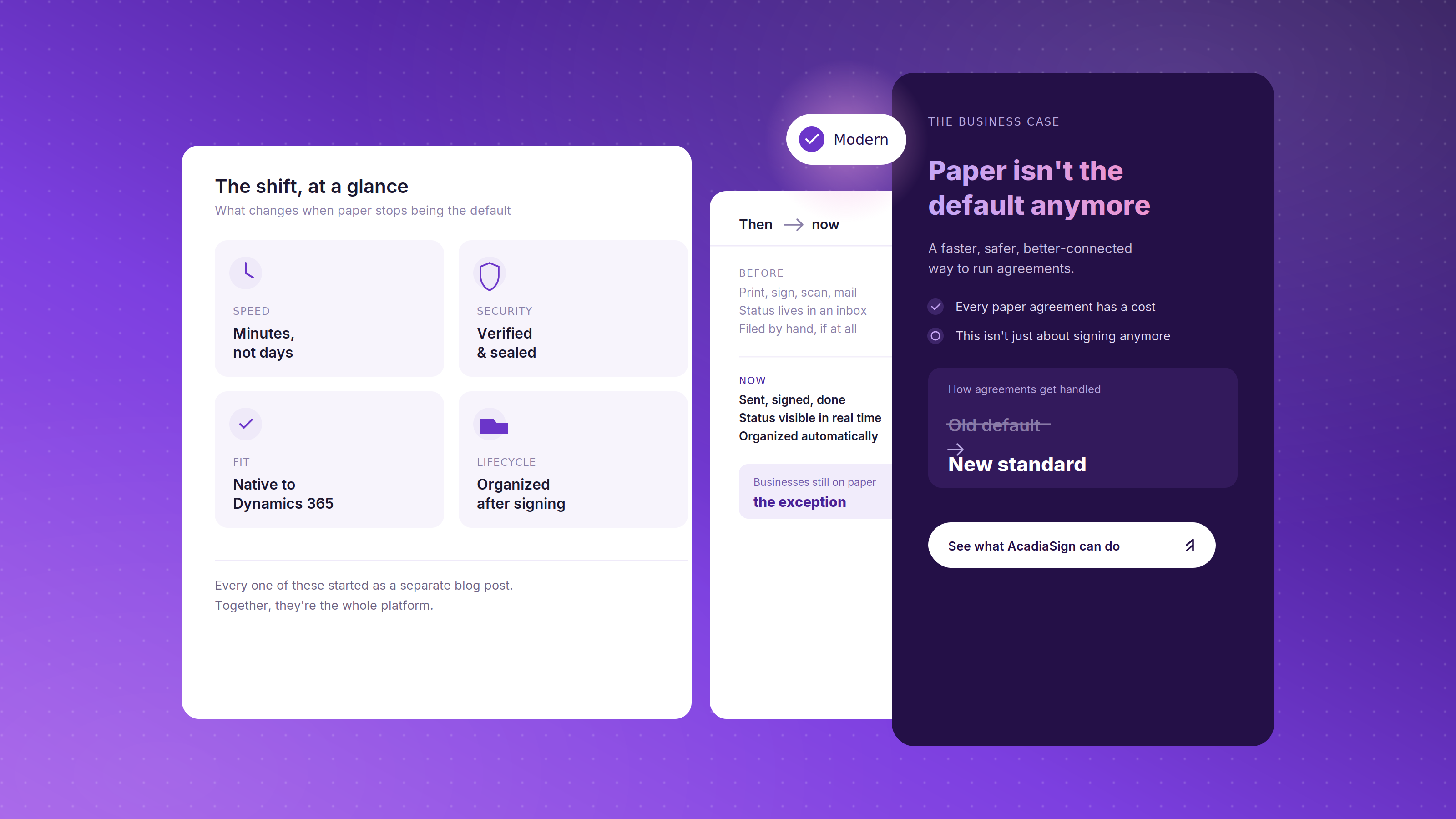
There was a time when moving agreements online was an experiment — something forward-looking teams tried while everyone else stuck with what worked. That time has passed. Digital agreements aren't the exception anymore; paper is.
Customers, partners, and employees now expect agreements to be handled the way most of the rest of business already is — quickly, digitally, without a trip to a printer. A business that still routes contracts through the mail isn't just slower, it's signaling something about how it operates, whether that's the intended message or not.
Sticking with paper-based or manual processes rarely feels like a decision — it feels like just how things have always been done. But that default carries a real, ongoing cost: slower deals, more administrative overhead, more room for error, and a weaker first impression than competitors who've already made the switch.
The businesses getting the most out of digital agreements aren't just replacing a pen with a click — they're rethinking how agreements move through their organization entirely: how they're routed for approval, how they connect to the systems that already run the business, how they're tracked and stored long after signing. The signature is the smallest part of a much bigger shift.
That's the shift AcadiaSign is built for — not just a faster way to sign, but a better way to handle agreements end to end: connected to the systems businesses already run on, secure by design, and built with room to grow well beyond the signature itself.
Every agreement a business handles the old way is time, money, and goodwill left on the table. The business case for moving to digital agreements isn't really about technology — it's about not paying a cost that no longer needs to be paid.