
Loading...
8/21/2026
By: AcadiaSign Team
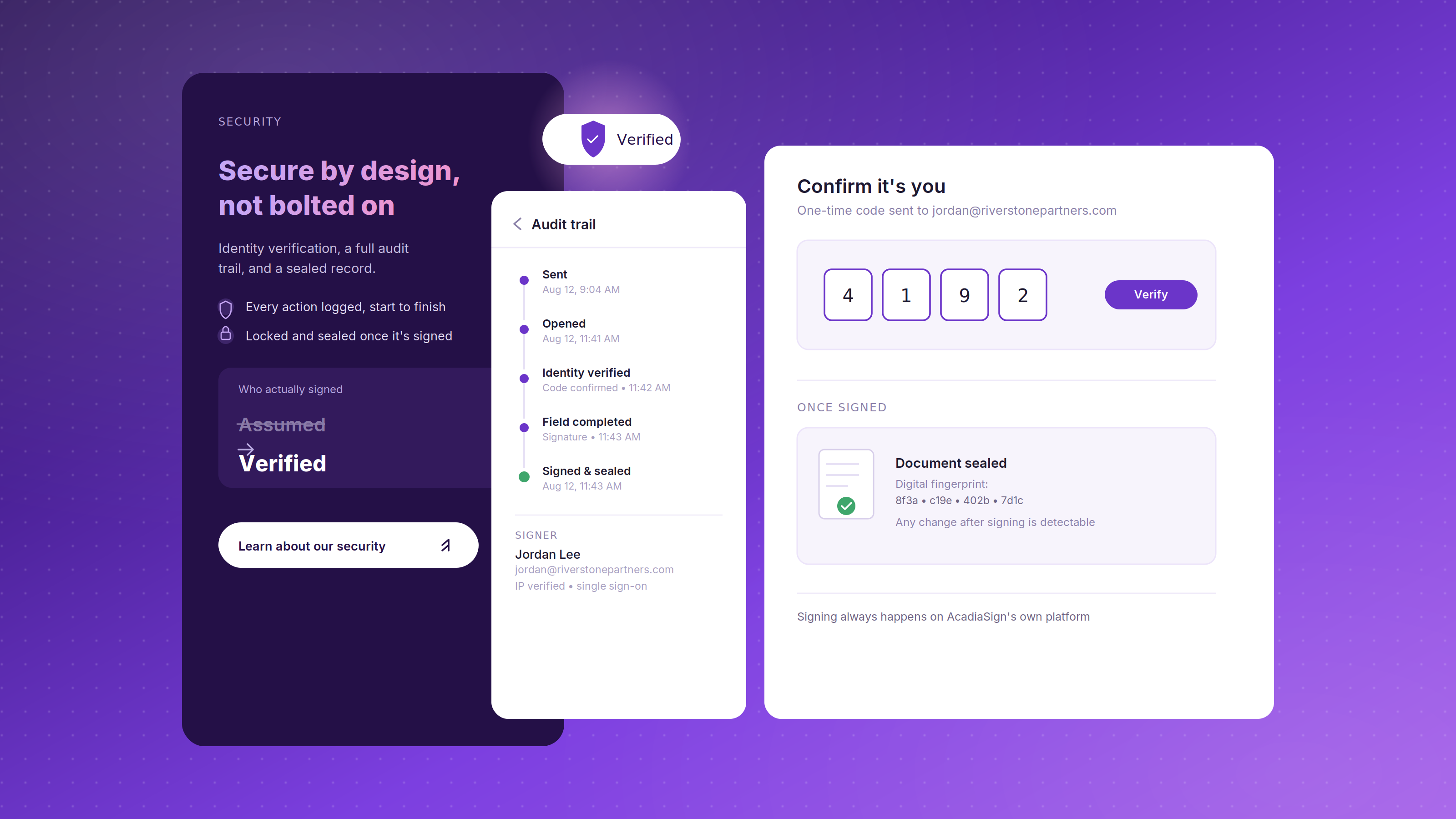
"Secure" gets used a lot in e-signature marketing, but it's worth unpacking what actually makes an electronic signature trustworthy — especially for agreements that matter.
A secure e-signature platform verifies identity before treating a signature as valid — commonly through a one-time verification step tied to the signer's email or phone. That verification is what turns a signature from "someone typed a name" into something that can actually be trusted.
A secure platform doesn't just record the final signature — it records the whole story: when a document was sent, when it was opened, when each field was completed, and when it was finished. That full activity trail is what makes a signed agreement defensible if it's ever questioned later.
Once an agreement is signed, it should be locked — sealed in a way that would visibly break if anyone tried to alter it afterward. This is typically done by generating a unique digital fingerprint of the final document, so any change after signing is detectable rather than invisible.
It's easy to overlook, but the platform hosting the actual signing session matters as much as any individual feature. If signing takes place on infrastructure the vendor doesn't fully control, security becomes harder to guarantee end to end. AcadiaSign keeps every signing session on its own platform — full stop — even when a business customizes how the agreement email looks in their inbox.
For businesses using single sign-on, a secure platform can let verified, logged-in users move through signing without repeating identity checks that have already been satisfied elsewhere — speeding things up without cutting corners on who's actually on the other end.
When evaluating any e-signature platform, ask directly: Where does signing happen? What's verified, and how? What happens if a signed document is ever challenged? A platform that can answer clearly is one built with security as a foundation, not a feature added later. That's the standard AcadiaSign is built on.