
Loading...
8/21/2026
By: AcadiaSign Team
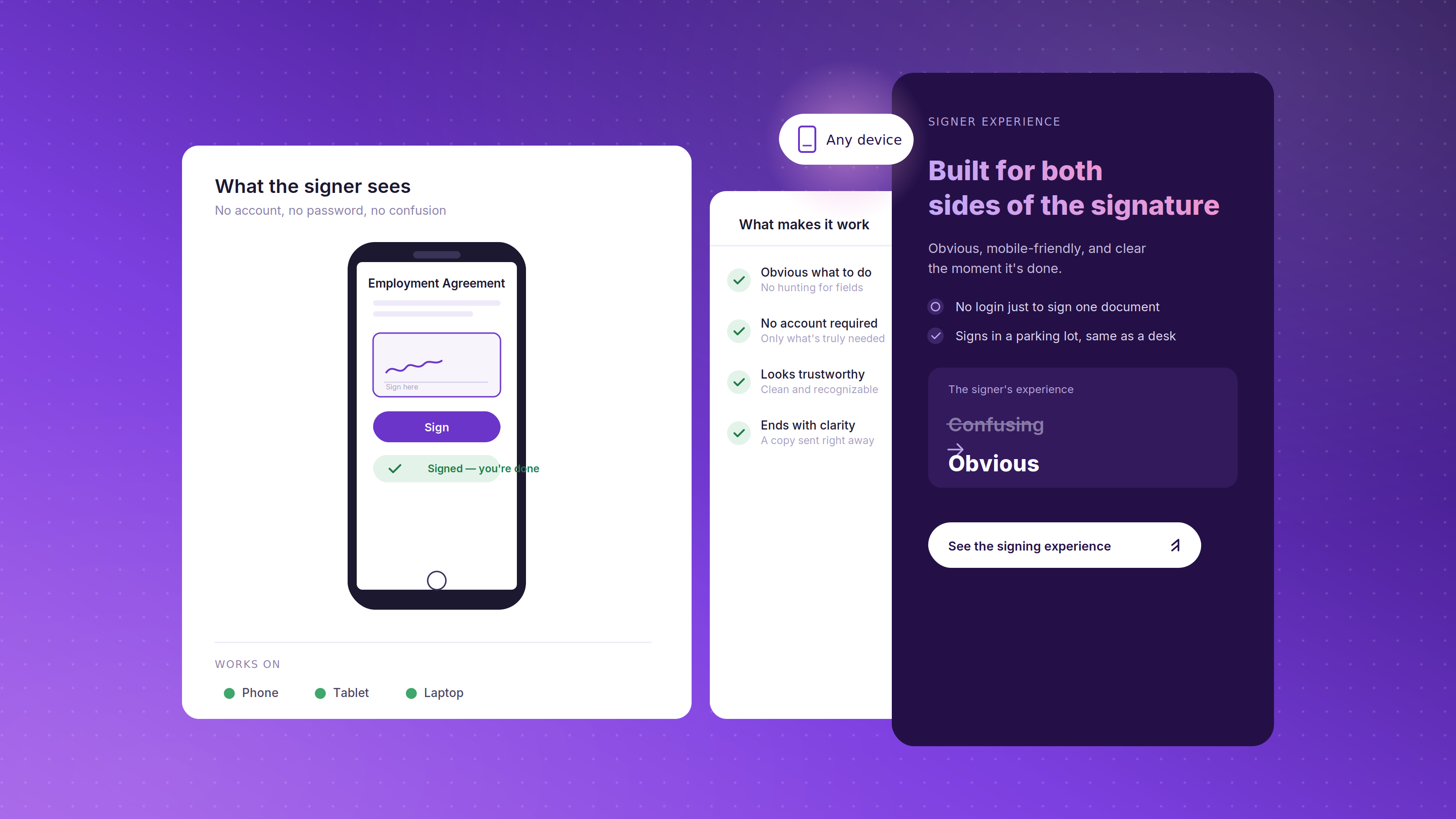
Most conversations about e-signature platforms focus on the business sending the document. But every agreement has two sides — and the experience on the signer's side matters just as much, even though they didn't choose the platform.
A good signing experience doesn't require instructions. The signer should be able to open a document and immediately understand what they're being asked to review and where they need to act — no hunting for a tiny "click here" field buried on page four.
Not everyone signs from a desktop. A great signing experience works just as well on a phone in a parking lot as it does on a laptop at a desk — because that's genuinely where a lot of signing happens.
Forcing a signer to create an account and set a password just to sign one document adds friction to something that should be simple. The best signing experiences ask for only what's actually needed to verify identity and complete the agreement — nothing more.
People hesitate to click through something that looks unfamiliar or unpolished — and for good reason, given how often that instinct is right. A clean, professional signing page reassures a signer that they're in a legitimate place, which matters as much as any security feature running in the background.
Once a document is signed, the signer should know it — clearly, immediately, with a copy they can access if they need it later. An experience that ends in ambiguity leaves both sides unsure whether anything actually happened.
It's easy to evaluate an e-signature platform purely on what it can do for the sender. But the signer's experience shapes how an agreement — and the business behind it — gets remembered. That's why AcadiaSign is designed around both sides of the signature, not just one.