
Loading...
8/21/2026
By: AcadiaSign Team
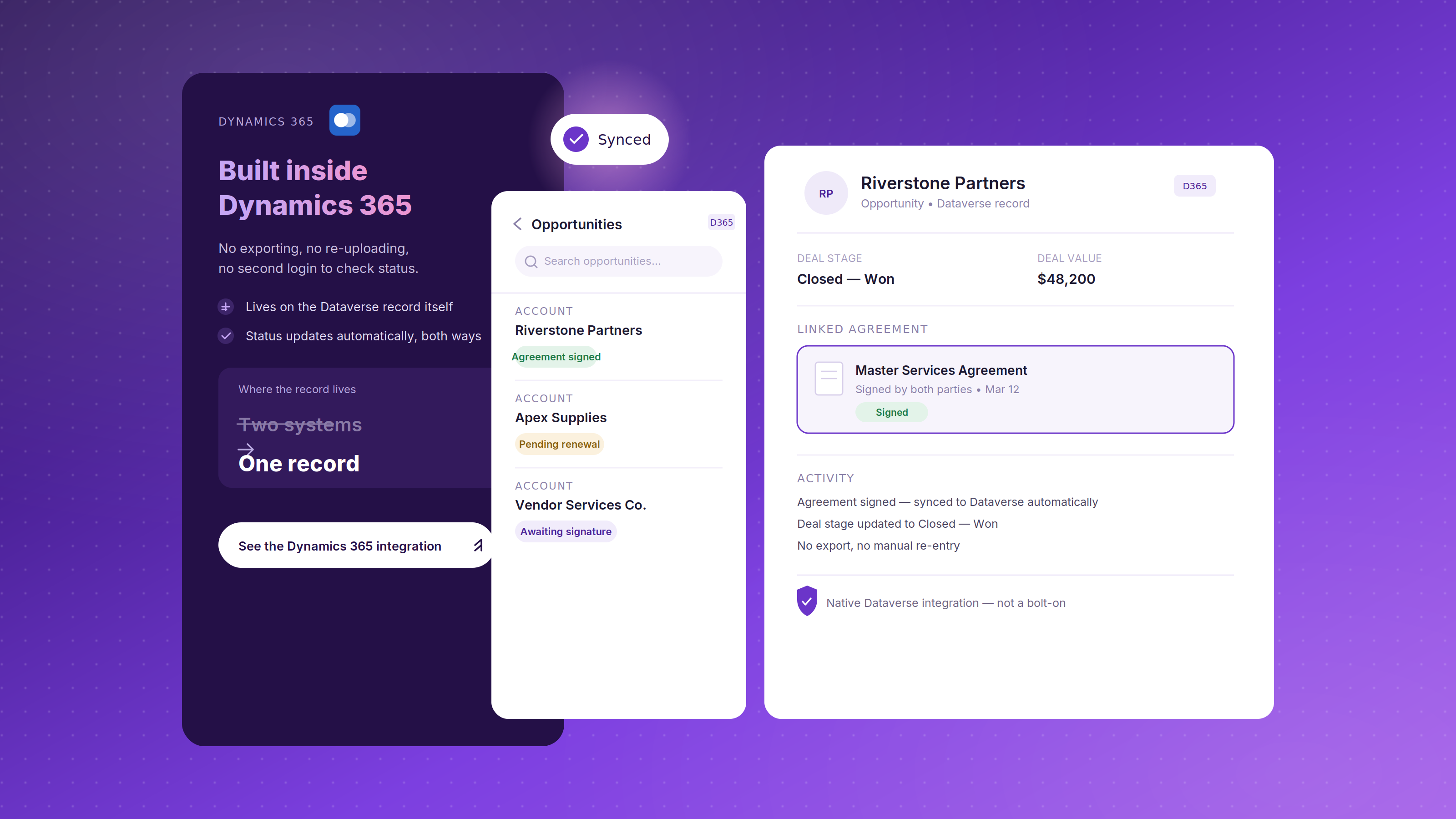
Most businesses running on Microsoft Dynamics 365 didn't choose it by accident. It's where customer records live, where deals get tracked, where the real system of record sits. So it's worth asking: why does the e-signature step so often happen somewhere else entirely?
When a signing tool lives outside Dynamics 365, every agreement creates extra work just to keep records in sync. Someone has to copy a signed document back into the CRM. Someone has to manually update a deal's status once it's actually signed. Someone has to remember which system has the current version. None of that is a signing problem — it's an integration problem, and it's one that a lot of businesses have just learned to live with.
When an e-signature platform is built to work natively with Dynamics 365 and Dataverse, an agreement isn't a side process — it's part of the same record from the start. A signed document, its status, and its history live directly alongside the customer or deal it belongs to. No exporting, no re-uploading, no separate login to check where something stands.
That's not a minor convenience. It's the difference between a signature being an isolated event and genuinely being part of the business process it's supporting.
Every extra system a team has to check is a place where information can drift out of sync — a deal marked "pending" in the CRM that was actually signed three days ago, because nobody updated it. Keeping the signing step inside the platform a business already runs on closes that gap by design, not by relying on someone to remember.
Teams already working in Dynamics 365 shouldn't have to learn a second platform just to get an agreement signed. AcadiaSign is built with native Dynamics 365 and Dataverse integration as a core part of the platform — not an add-on — so agreements stay where the rest of the business already lives.